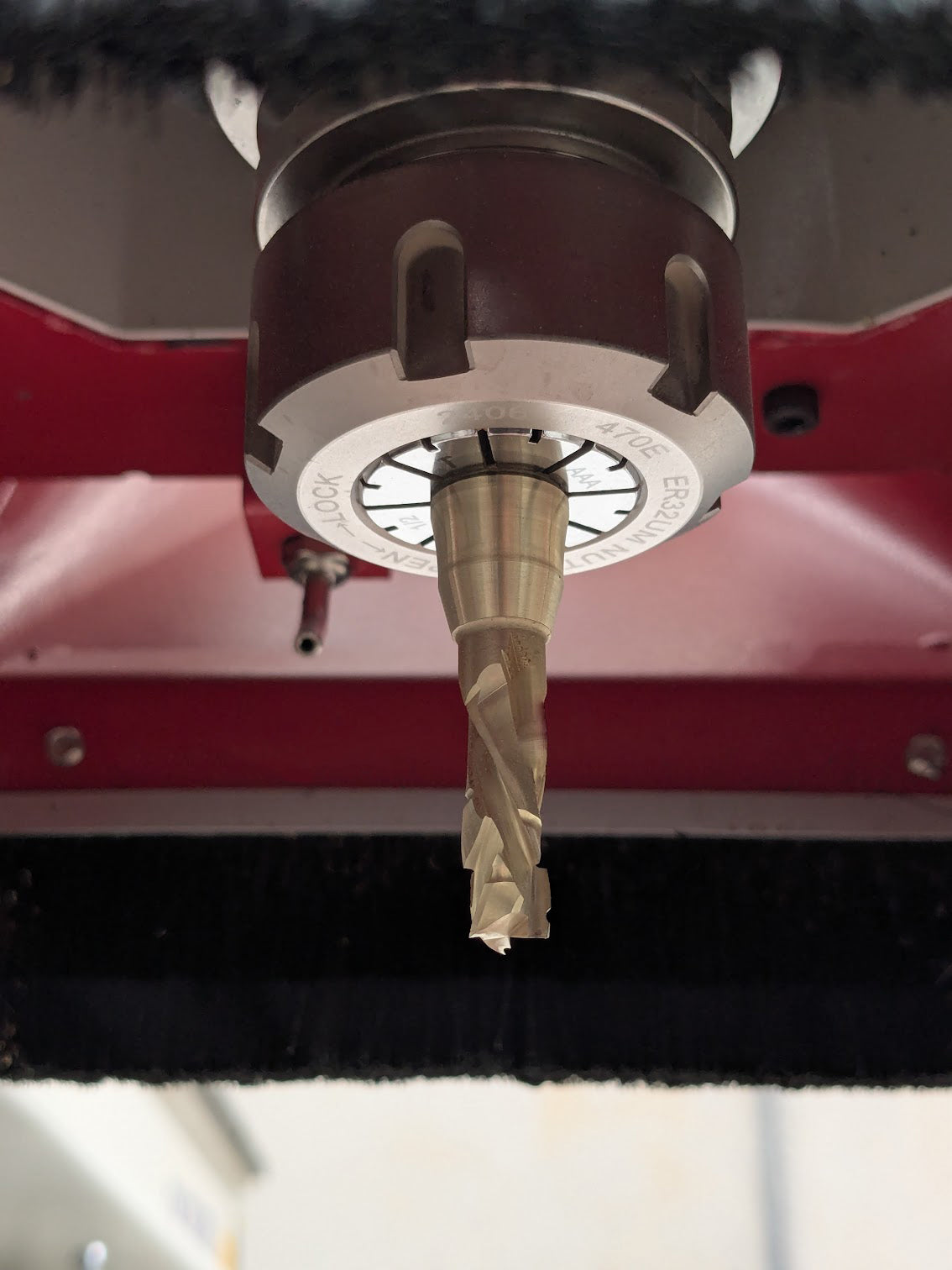


ER32 Collet - AAA Grade (<0.005mm TIR)
ER32 Collet - AAA Grade (<0.005mm TIR)
Low stock: 5 left
Couldn't load pickup availability
Maximise your CNC router's cutting precision, surface finish, and tool life with our high-precision ER32 collets. Designed for high-speed spindles running up to 24,000 RPM, our collets feature low runout (<0.005mm TIR) to prevent tool chatter, eliminate bit slippage, and ensure clean, tear-out-free cuts in MDF, plywood, hardwoods, and compact laminate.
Whether you are running an ATC spindle or a manual chuck, upgrading to hardened spring collets protects your investment in high-end carbide and PCD tooling.
Manufactured to ISO 15488 standard
AAA Grade (<0.005mm TIR) high-precision collets.
Composed of 65Mn high-carbon manganese alloy spring steel. It offers high strength, excellent elasticity, and good wear resistance.
How Do I Pick the Right ER32 Collet Size?
Match the inner diameter (ID) of the collet directly to the shank diameter of your router bit, not the cutting diameter.
-
Common sizes include 6 mm, 10 mm, 12.7 mm (1/2 inch)
-
Your tool usually has the diameter of the shank etched on the side
-
Tip: Use dedicated metric collets for metric shanks and imperial collets for imperial shanks. Never force an imperial shank into a metric collet, as improper clamping can create excess runout and tool slippage.
When Should I Replace My ER32 Collets?
Collets are wearable consumable parts. Replace your ER32 collets every 400 to 600 hours of run time per tool (or every 3–6 months in heavy production shops). Replace them immediately if you notice:
-
Visible wear marks, burrs, or scoring inside the internal bore or on the outer taper.
-
Resin buildup or rust that cannot be removed with a brass brush and collet cleaner.
-
Increased chatter marks on your finished edges, or bits slipping inside the chuck during heavy cuts.
How Do I Correctly Install a Collet?
-
Snap into Nut First: Insert the collet into the ER32 collet nut at an angle until the eccentric ring inside the nut clicks securely into the collet groove. Never insert the collet into the spindle tapers before snapping it into the nut.
-
Clean Everything: Thoroughly wipe the spindle taper, collet exterior, and nut threads clean of dust and pitch.
-
Insert the Tool: Insert the CNC tool shank so it fills at least 80% of the total collet length (avoid bottoming out the bit against the back of the tool holder). Alternatively, if the tool has a positioning stop, seat the tool all the way down to the positioning stop.
-
Torque to Spec: Hand-thread the assembly onto the holder, then use a torque wrench to tighten to the recommended 110-135Nm for ER32 nuts. Over-tightening deforms the collet, while under-tightening causes tool pull-out.
-
Re-probe the Tools: Remember to re-measure the tool length offsets for the tools and collets replaced via your automatic tool measuring probe or manual probe.